The Ritz-Carlton Yacht Collection: When Familiar Service Matters More Than the Destination

Siqi not Sushi
Hospitality that moves. The Ritz-Carlton Yacht Collection carries the service you trust on land to sea — three yachts, all-suite ships, and what booking well adds.

In this guide
The Ritz-Carlton Yacht Collection: When Familiar Service Matters More Than the Destination
For a traveler who stays at Ritz-Carlton, Aman, or Four Seasons on land, the hesitation before boarding a ship is rarely "is it luxurious enough." It is more ordinary: will I have to learn a whole new set of rules in an unfamiliar place?
The Ritz-Carlton Yacht Collection's answer is no. It takes the service rhythm Ritz-Carlton has already proven on land — the one where you never explain a preference twice, because someone remembers — and carries it, unchanged, to waters no hotel can reach. The destination proves the logic; it is not the point. The point is whether the familiarity holds.
This is a full view of the brand: what it is, the three yachts and how they differ, what life on board actually feels like, what is included and what is not, the booking details that decide whether it fits you — and what gets added to the fare when you book it the right way.
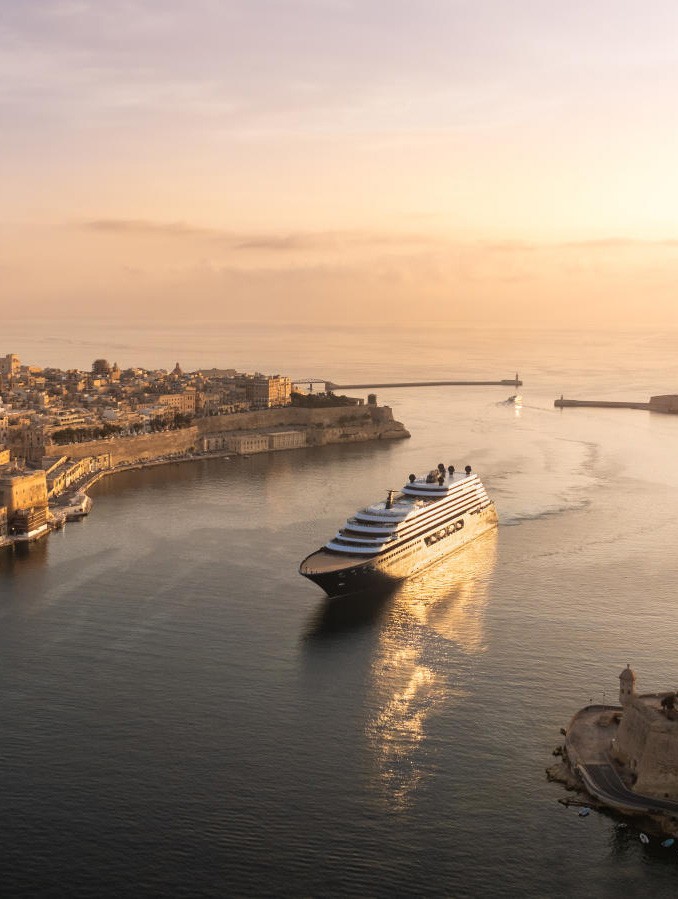
Photo: The Ritz-Carlton Yacht Collection.
It is not a cruise category — it is hospitality that moves
Place RCYC in the "luxury cruise" frame and compare deck size and restaurant count, and you will be comparing the wrong things. The more accurate category is the one it shares with Four Seasons Yachts and Amangatī: hospitality that moves — an attempt to leave no gap between "stepping onto a ship" and "stepping into a familiar suite." The big cruise lines are not in this category; they sell the breadth of facilities and activities, not the continuity of service.
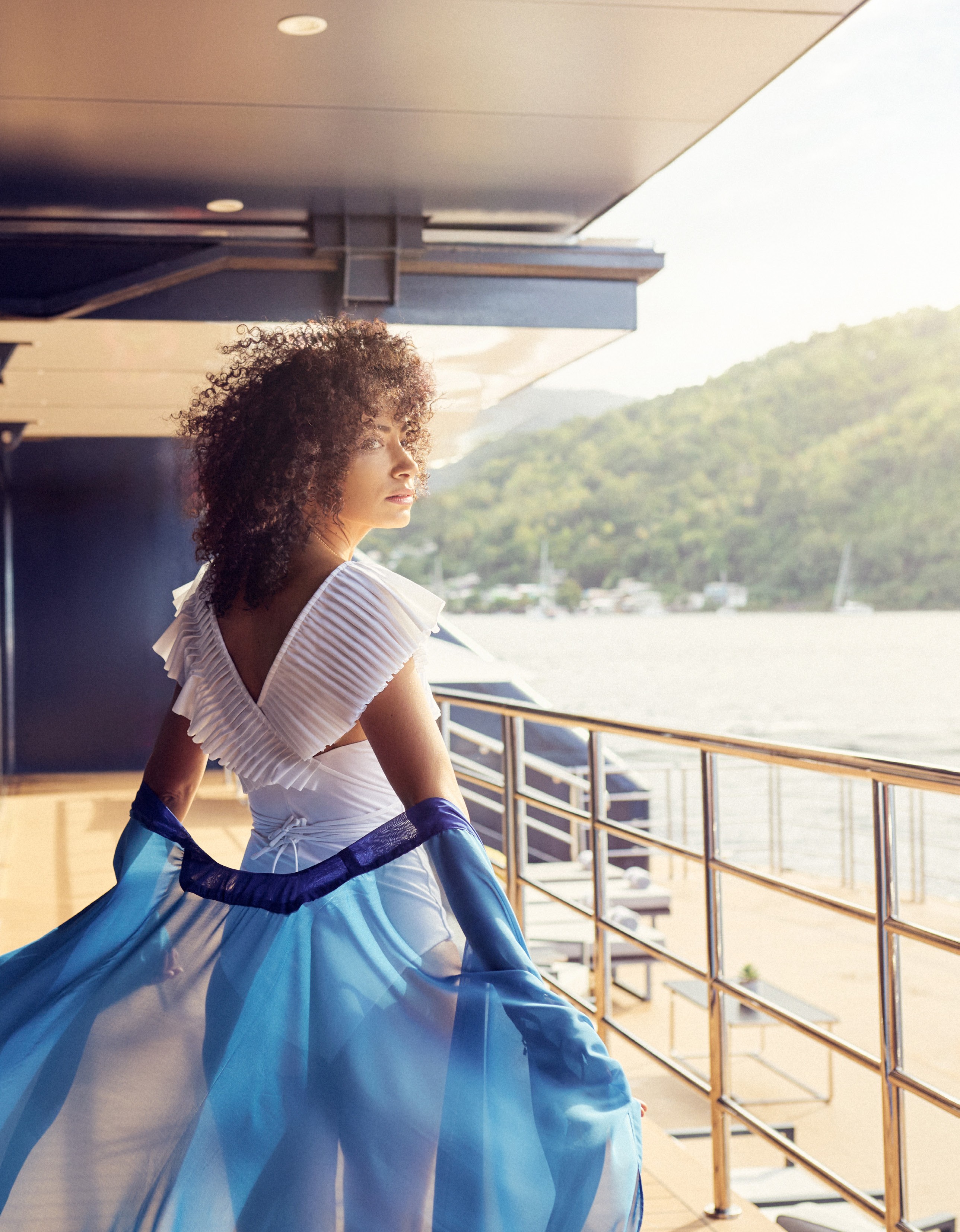
Photo: The Ritz-Carlton Yacht Collection.
In 2026, Forbes Travel Guide brought cruise into its Five-Star rating system for the first time, and Ilma became the first — and so far only — ship to earn Five Stars. The result itself is not the news. The news is that it confirms the new category's standard: a ship measured by a hotel's yardstick, not a cruise line's.
Forget whether you've cruised — where has your money gone? You do not need to have cruised. What matters is where your money has gone — to Ritz-Carlton, Aman, and Four Seasons on land, or to a traditional cruise line. If the former, you are this product's actual audience; if the latter, you may well find it "too quiet, too small." If this is your first look at it, do not start from the "cruise experience." Start from what you already know: space, the continuity of service, and the fact that where you want to go has no equivalent on land. And if you are a genuine cruise enthusiast, you need none of that framing — the product holds no persuasion problem for you; it is simply not always the best fit. A traditional line's density of activity tends to suit you better.
The three yachts — and the all-suite ships
Three yachts, three ways to feel at sea
The fleet is deliberately small, and the three ships are not the same product in different colors. Choosing the wrong one is the most common mistake here.
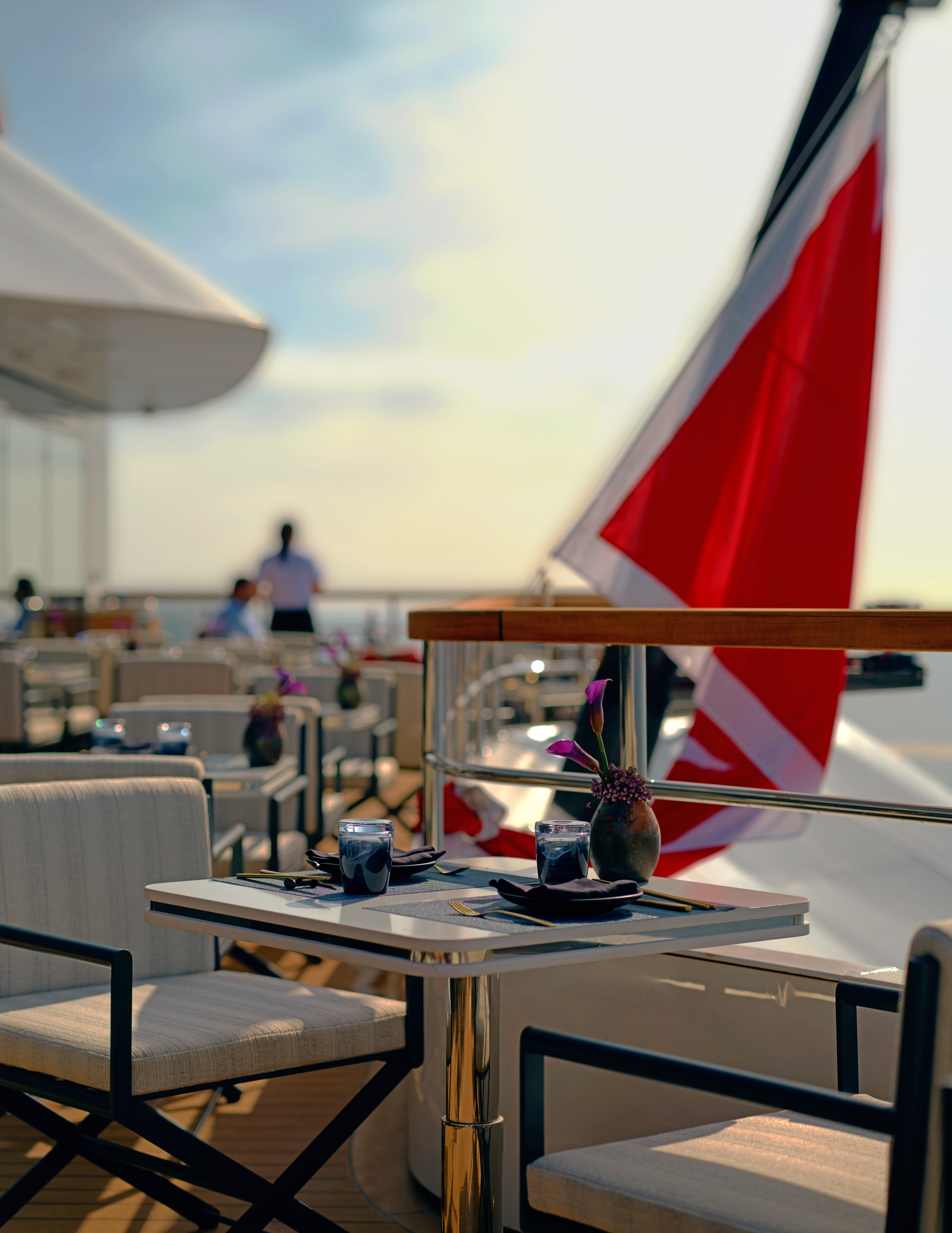
Photo: The Ritz-Carlton Yacht Collection.
Evrima (298 guests) is the first flagship and the smallest of the three, carrying under two-thirds of the others. Its space feels closest to a private yacht — for you if you value privacy and do not much mind whether the hardware is the newest.
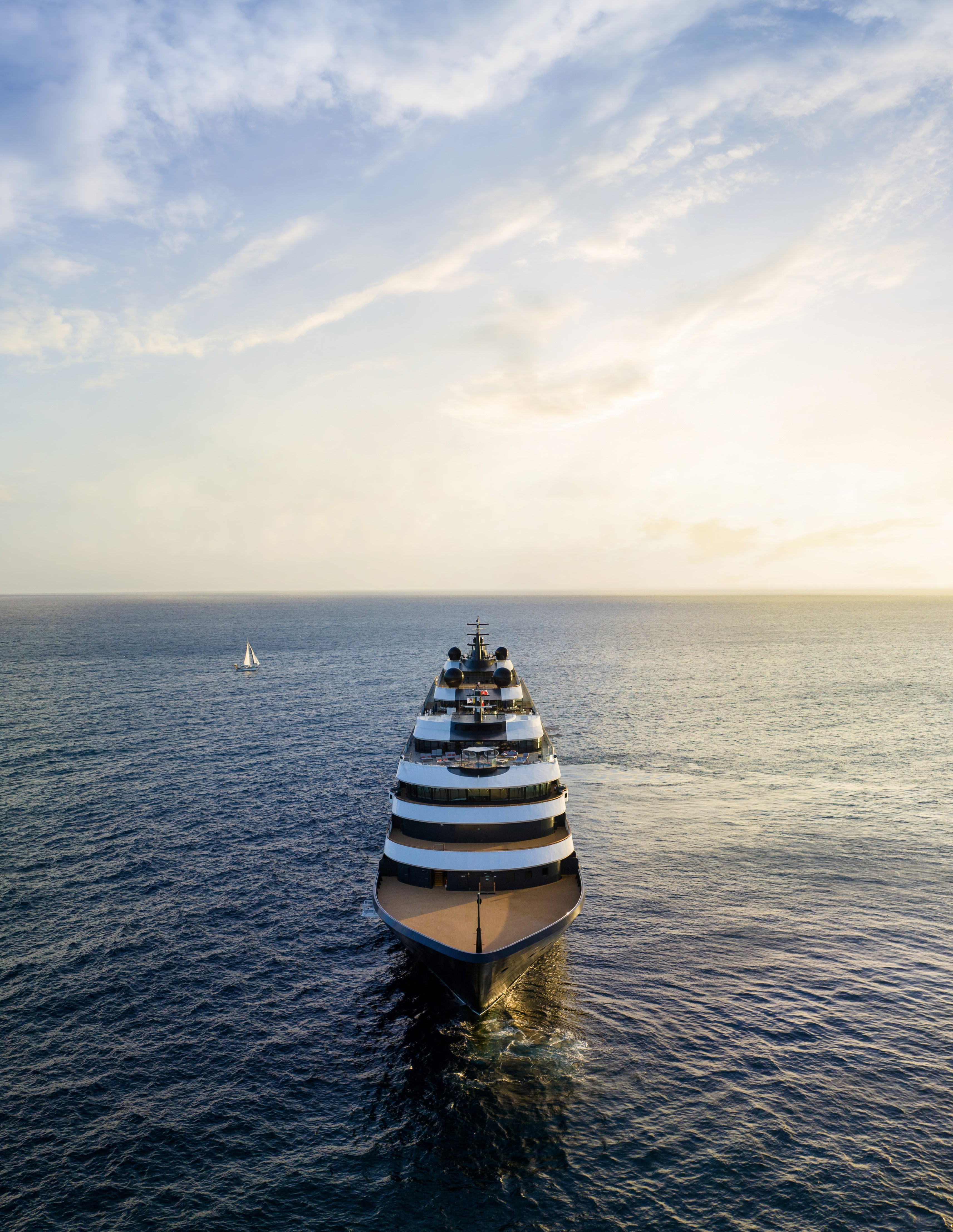
Photo: The Ritz-Carlton Yacht Collection.
Ilma (448 guests) is the second generation — more space, a fuller configuration, and the ship that earned Forbes Five Stars. This is the one for you if you want the complete, current standard without scaling up to a big-ship feel.
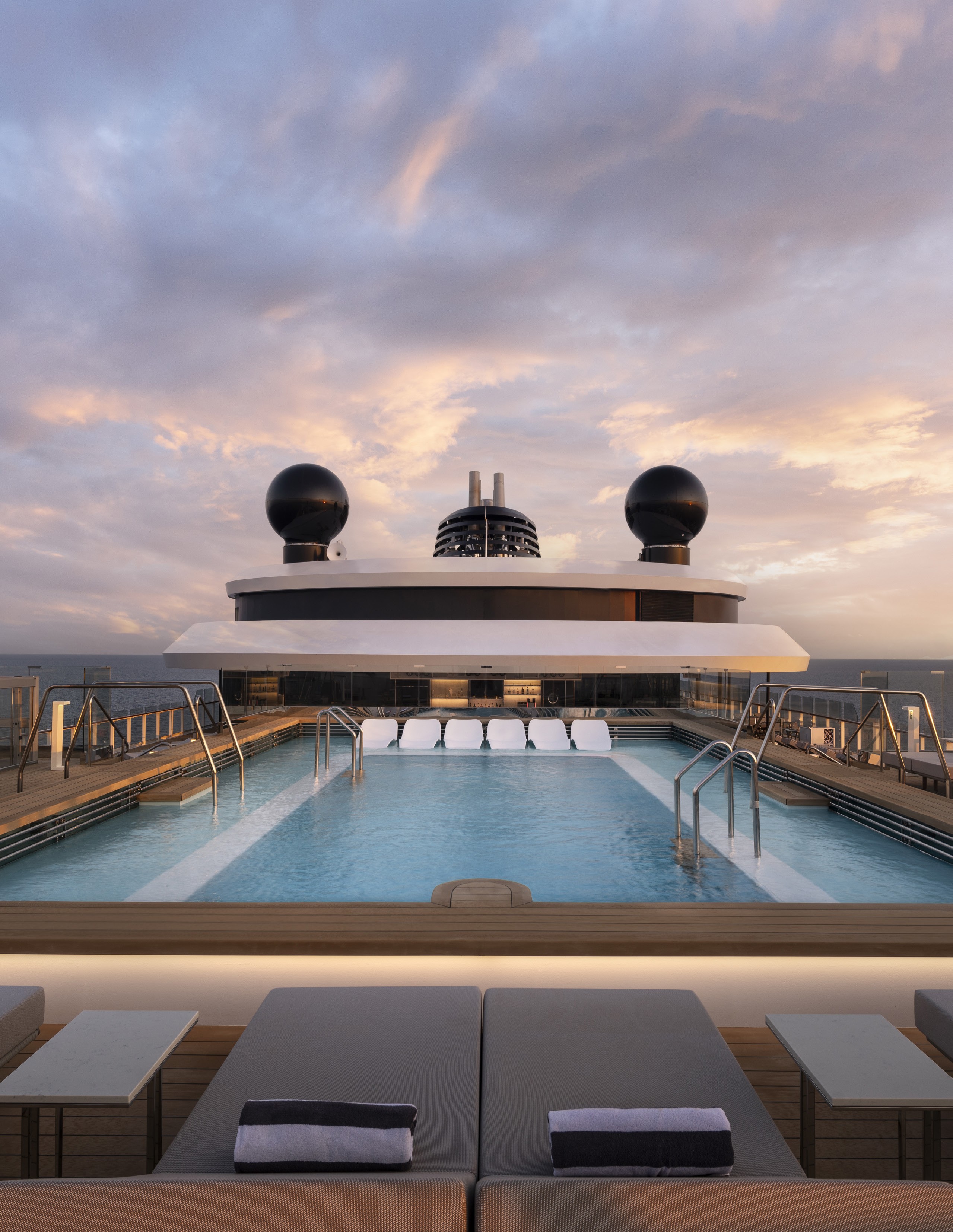
Photo: The Ritz-Carlton Yacht Collection.
Luminara (452 guests) is Ilma's sister and the newest in the fleet, carrying the same next-generation standard into more destinations.
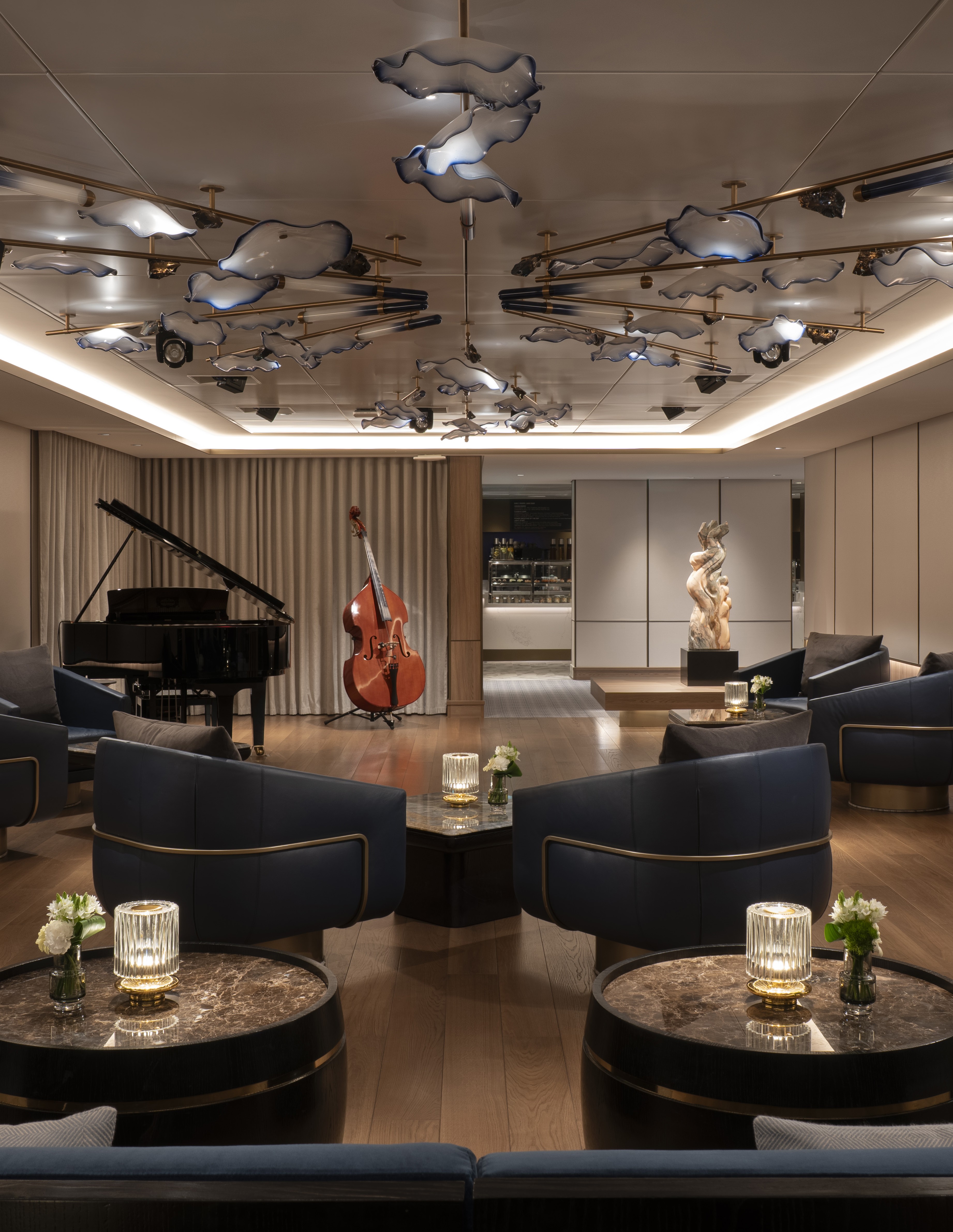
Photo: The Ritz-Carlton Yacht Collection.
Crew-to-guest ratio sits near 1:1 on all three. That is not a point of difference between them; it is the product line's floor, not one ship's selling point. Route coverage spans the Mediterranean, the Caribbean, Northern Europe, Asia-Pacific, and — added for winter 2026–2027 — French Polynesia, so the ships themselves are a breadth play; the choice among them is a feeling, not a spec sheet.
Every suite opens to the sea
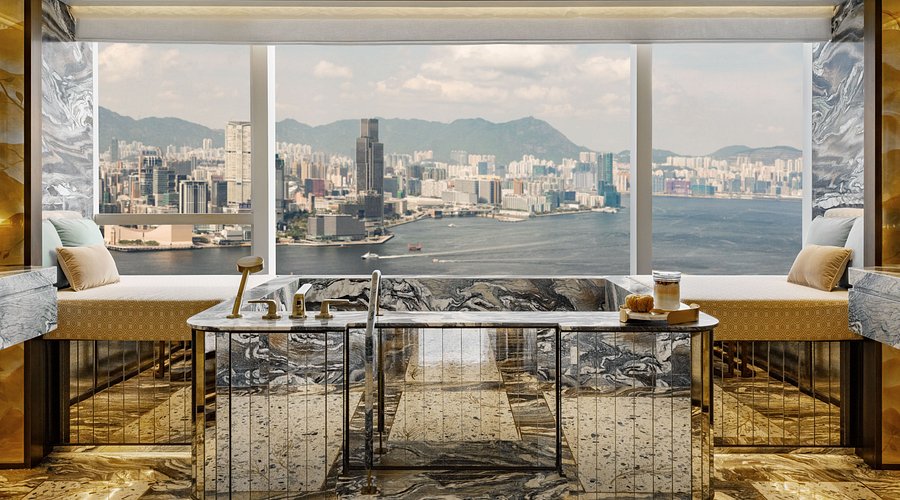
There are no cabins on these ships — every stateroom is a suite, and every suite carries a private terrace and floor-to-ceiling sea views. The range runs from an entry Terrace Suite through two-story Loft and Grand suites to a small number of Owner's Suites at the very top, with Signature and View categories in between.
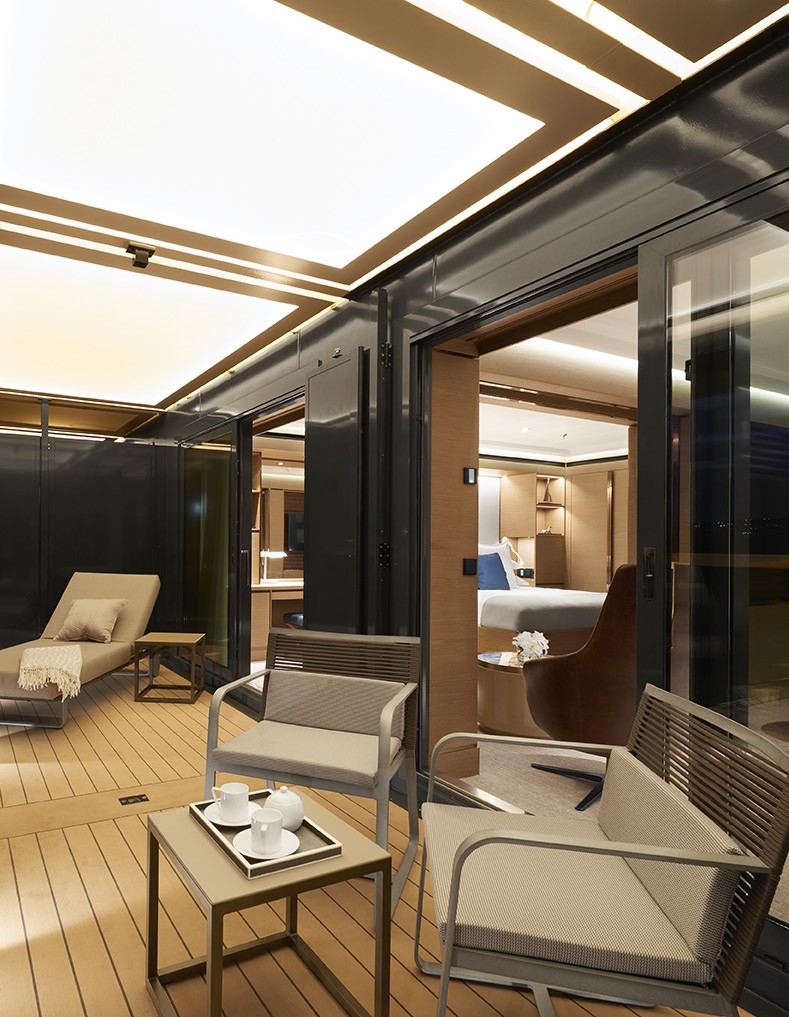
Photo: The Ritz-Carlton Yacht Collection.
The detail that matters most at the planning stage: the upper tiers are genuinely scarce. Some categories exist as a single suite or two per ship, so an Owner's Suite or a specific upper tier is a 12–18-month decision, not something you pick up late. For most guests the real choice is between the entry Terrace Suite and the mid Signature and View categories — where the difference is square footage and layout, not the standard of service. Every suite gets the same all-suite treatment, the same terrace, the same sea.
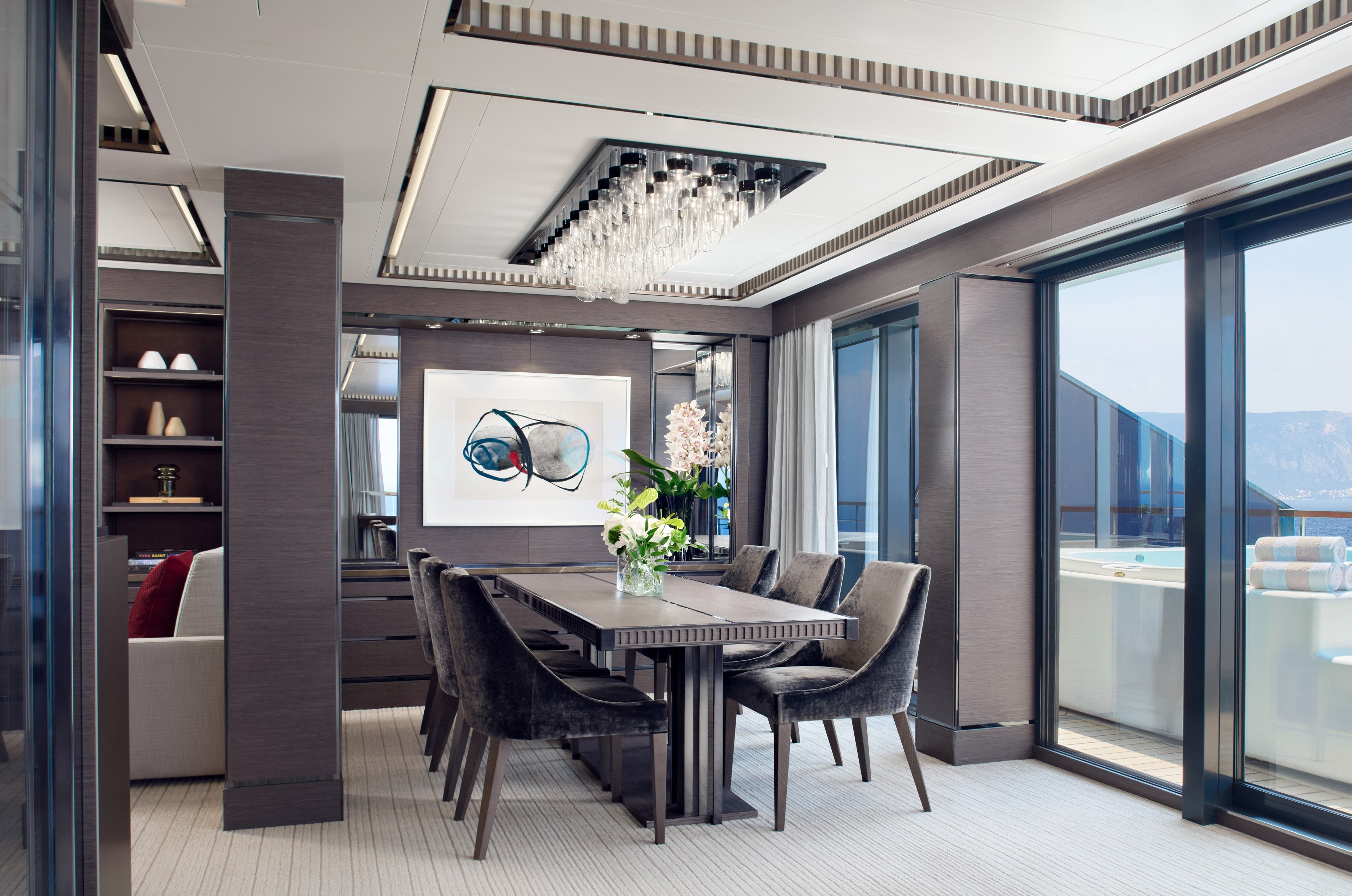
Photo: The Ritz-Carlton Yacht Collection.
What life on board actually feels like
The shortest way to judge RCYC is not a list of venues; it is what a day on board is built around. A handful of things define it.

Photo: The Ritz-Carlton Yacht Collection.
Space is designed for the people on it, not the capacity it holds. Public rooms feel like a hotel's living room, not a ship's atrium — seating is arranged for conversation, and the guest count stays low enough that no venue is ever a line. There is no buffet hall, no casino, no theater with a thousand seats. The trade is deliberate: fewer venues, each one more considered.
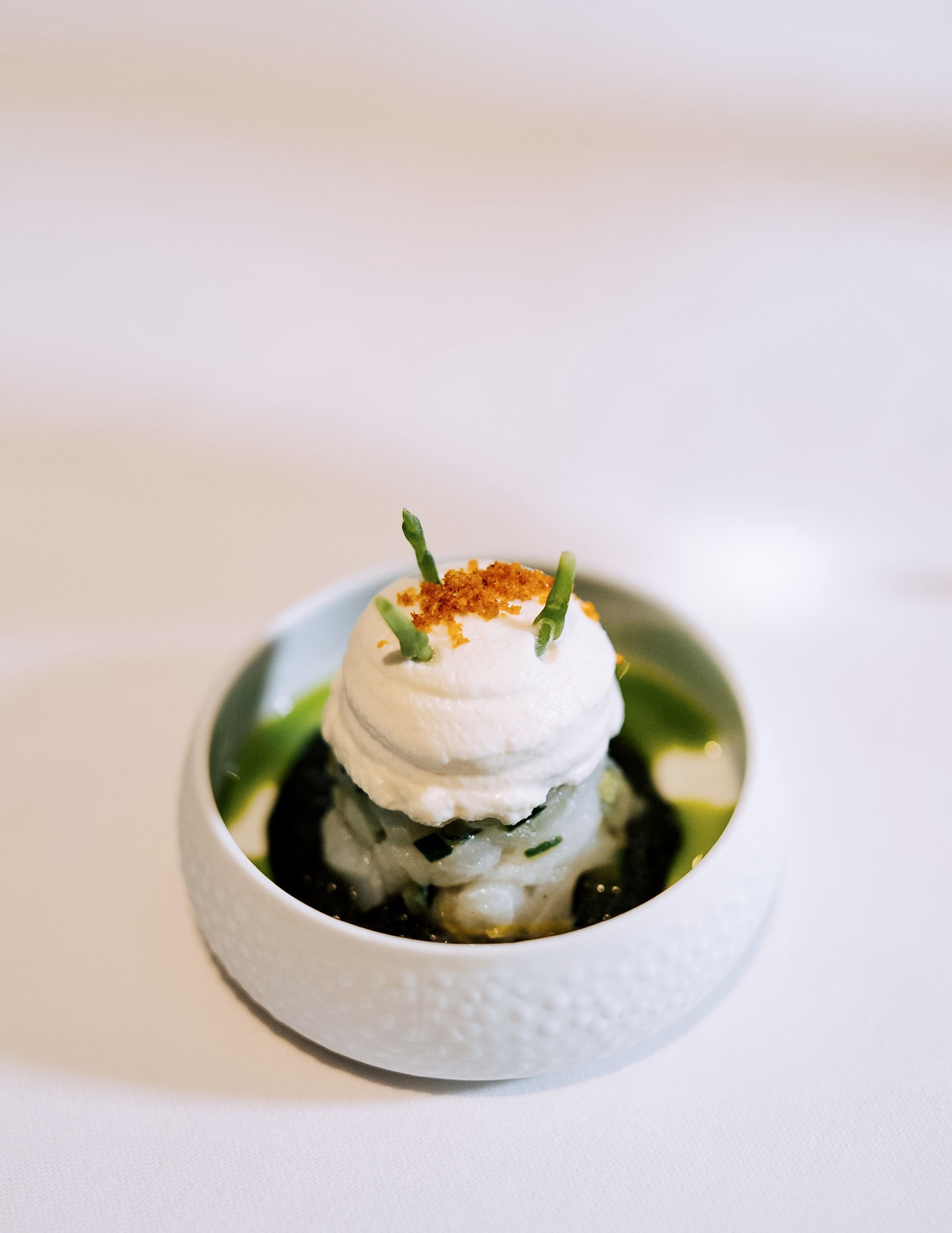
Photo: The Ritz-Carlton Yacht Collection.
Dining is restaurants, not banquet. Across six to eight venues, the food is chef-driven and à la carte, and the standard is set high enough that it is usually the thing guests mention first. Ilma added a wine vault and more distinct dining rooms; the point is variety without volume.

Photo: The Ritz-Carlton Yacht Collection.
Wellness is a real wing, not an afterthought. The Ritz-Carlton Spa carries treatment rooms with sea views, and the fitness and treatment spaces are sized for the guest count — bookable, not crowded.
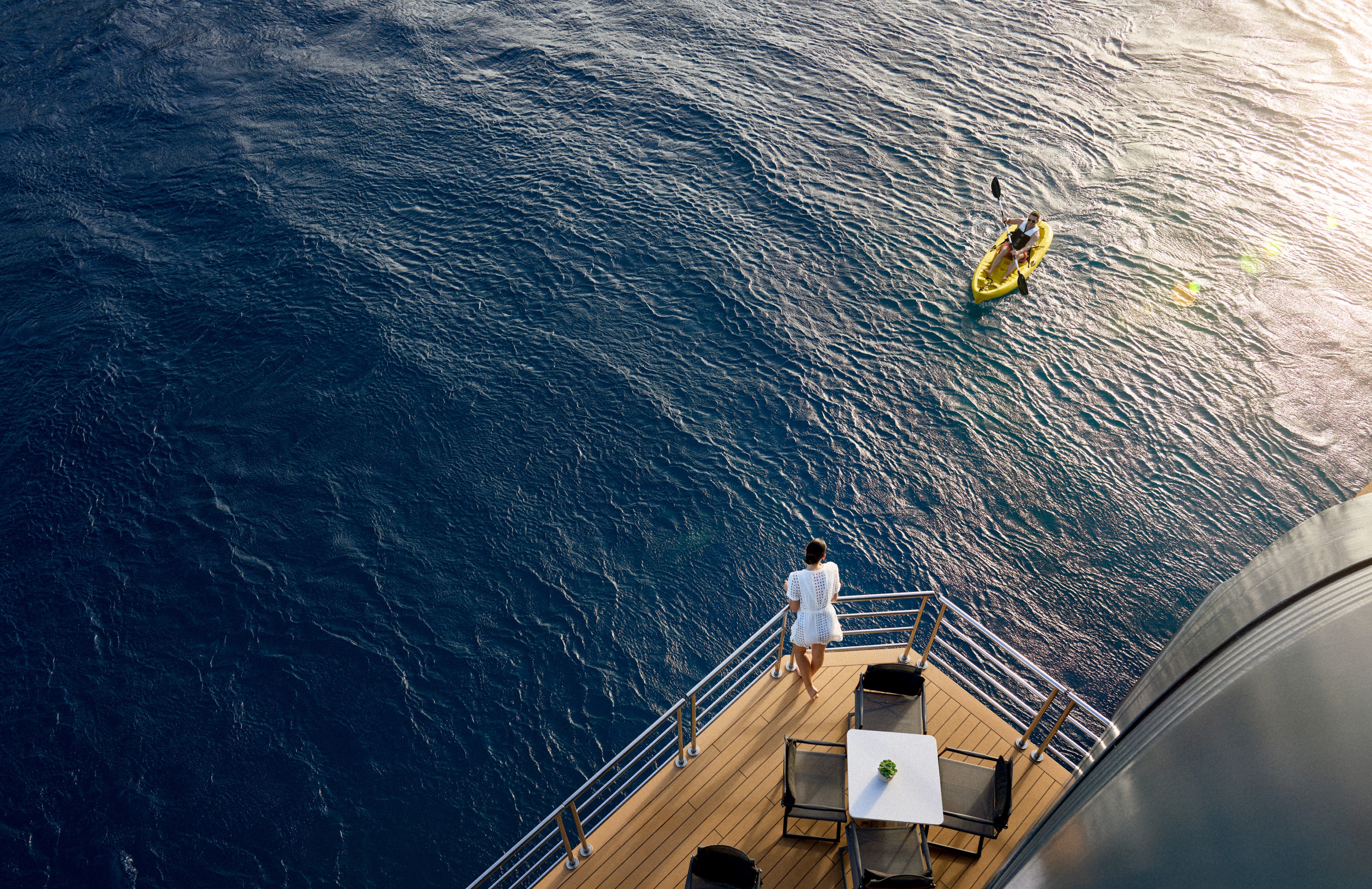
Photo: The Ritz-Carlton Yacht Collection.
The Marina is the one thing a hotel genuinely cannot copy. When the ship is at anchor, the aft platform opens straight onto the water with kayaks, paddleboards, and tenders — the moment that most clearly answers "why a ship at all, and not a hotel."
None of this is aimed at the cruiser. It is aimed at someone who already knows how a good hotel should feel, and simply wants that feeling to survive the water.
The booking reality
What's included — and what isn't
This is the first question you are likely to ask, and the starting point for "is it worth it."
Included in the fare:
All meals across the ship's 6–8 restaurants
A curated selection of wines and beverages
The marina platform with its water toys
Not included, at extra cost:
Shore excursions — bookable from 120 days before departure, and the popular ones sell out
Flights, transfers, insurance, and private custom excursions
In short: the core of "sleeping and eating" is looked after; "what you do once ashore" is still yours to plan and pay for. This is why — as the section below notes — if what you want is a "pay once, think of nothing" all-inclusive, RCYC is not always the answer.
Who this is not for
Three kinds of travelers for whom RCYC is usually not the best answer — and saying so plainly is worth more than a hard sell:
The truly all-inclusive traveler. Seabourn, Regent, and Explora include more broadly; if your expectation of "all-inclusive" extends to shore excursions, those brands fit the budget better.
The guest who wants deeper privacy. A smaller product like Amangatī puts more weight on privacy and personal service, closer to the Aman experience on land.
The guest who wants deep cultural immersion. Some expedition products go further on destination depth and onboard expertise; if the core need is culture and nature rather than continuity of service, an expedition product is often the more accurate answer.
Before you book — and what comes with it
Three things to know before booking
Three details that almost never appear in the marketing, and that are the most common source of an experience falling short — which is exactly why they are the things an advisor should be holding for you.
Pre-voyage preferences close two weeks before departure. The ship keeps a pre-voyage preference register for birthday surprises, dietary needs, and celebrations. It closes two weeks out; after that, the ship cannot respond same-day the way a hotel can. Without someone watching that date for you, the surprise that should have happened quietly does not.
Top suites need 12–18 months' lead. Some categories run one or two suites per ship; if that is what you want, planning starts very early. Caribbean sailings, by contrast, are often bookable 1–3 months out — a lighter start, no long-term commitment required. Inventory currently runs through 2028.
Solo pricing is not light. A single supplement of 175% (on the double-occupancy rate) applies — above Seabourn's 125%. The environment aboard is safe and welcoming for a solo traveler; the pricing structure is simply one to state up front, not something you should discover when the quote arrives.
Take one sailing as a budget anchor — a 7-night French Polynesia voyage aboard Evrima from Papeete on 15 December 2026 (per person, double occupancy): suites run from an entry Terrace Suite (around US$12,300) to the Owner's Suite (around US$61,500). For reference, an Overwater Suite with a Bora Bora view at Le Taha'a by Pearl Resorts — Relais & Châteaux on Taha'a — starts around US$2,074 a night, or close to US$14,500 for seven nights of room alone, before meals. Set side by side, RCYC's entry sits in the same budget band as the region's top land hotels — you are buying a full sailing, not a single stay. These are examples for one specific sailing; figures move with the sailing and cabin availability, so confirm current pricing before you book.
Four questions — and one "so"
Four questions decide whether you belong on RCYC. They apply equally to Four Seasons Yachts and Amangatī:
Destination reach — does the ship go somewhere a land hotel cannot cover, or that needs multiple flights to piece together?
Service expectation — hotel-style continuity, or a traditional cruise's density of activity and bundled excursions?
Inclusion philosophy — "pay once, think of nothing," or a core that is included and a rest that is chosen? RCYC is the latter.
Booking-window realism — can you accept 12–18 months' lead for a top suite? On a short clock, the Caribbean is the realistic option.
So — if all four point to RCYC, what decides whether the trip is good is no longer which ship, but whether someone is holding the easy-to-miss windows for you: the preferences deadline two weeks out, shore excursions opening at 120 days, a top suite locked a year and a half ahead. These are not details you can recover after the fact; missed is missed. Service continuity does not live in the ship — it lives in someone keeping those dates for you. That, not a booking form, is the case for handing this kind of trip to an advisor.
What comes with the booking
Booking through an advisor is not only about who holds the dates. It is also about what gets added to the fare — credit on board, recognition, hosted events, and a layer of agent-level benefits that do not show up on the public price. Here is the full picture for RCYC, as it stands today.
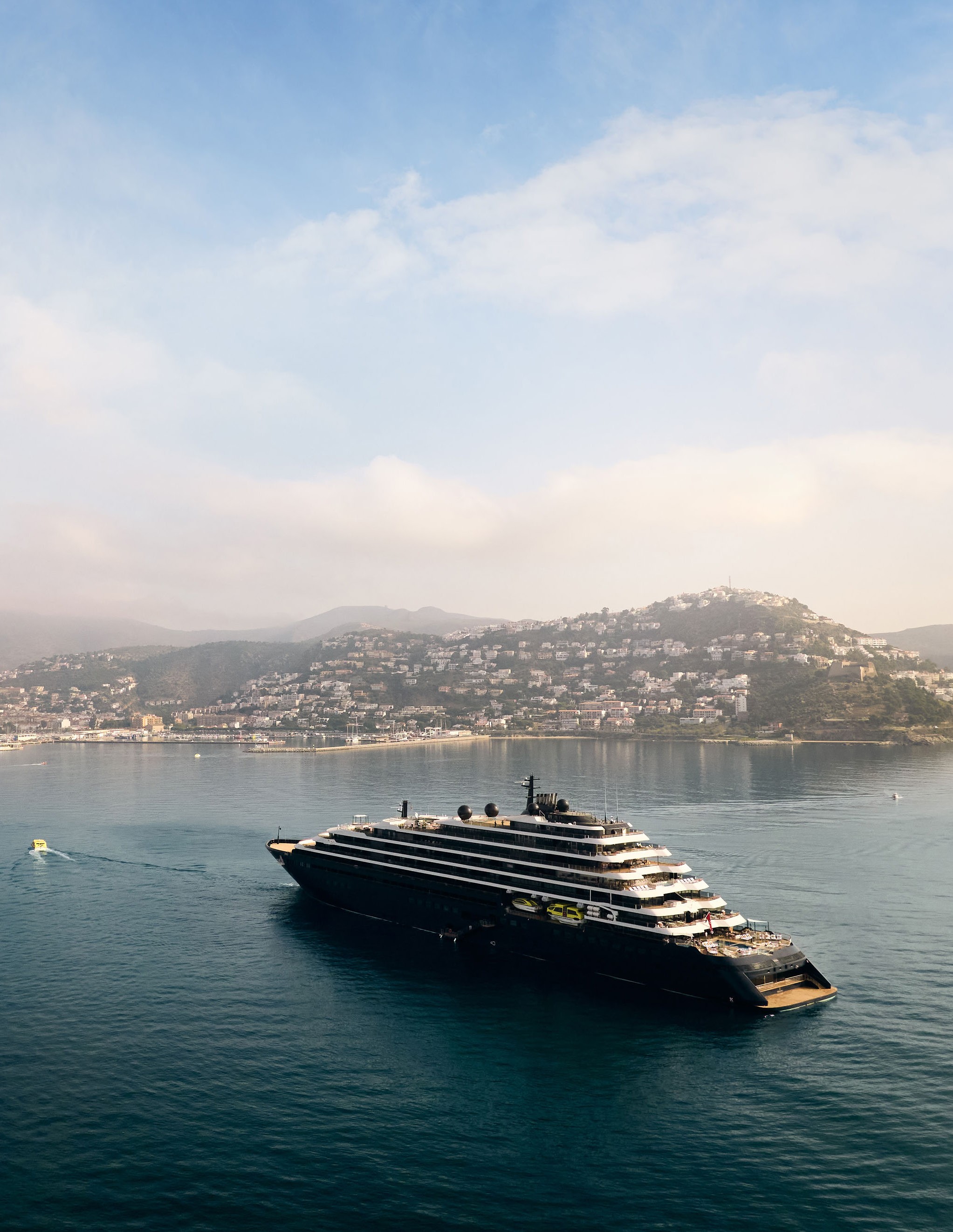
Photo: The Ritz-Carlton Yacht Collection.
The advisor-channel benefits (Marriott Bonvoy). RCYC is a Marriott brand, and the advisor channel is where the Bonvoy perks are strongest. The headline rates — laid out in the loyalty FAQ — earn out fast on a multi-night sailing. What compounds further is the tier-specific extras that ship with your status:
Silver — Bonvoy concierge.
Gold — elite welcome amenity.
Platinum — complimentary first-night pressing.
Titanium — priority embarkation and disembarkation.
Ambassador — priority S.E.A. reservations, plus full-voyage laundry.
Wonderia SELECT partner perks. Wonderia's SELECT-tier partnership with RCYC layers on a credit-plus-recognition stack:
US$150 per person on-board credit, up to US$450 per suite — applied to spa, specialty dining, or shore purchases.
Priority waitlist on sold-out categories.
Priority suite selection at booking.
VIP welcome amenity in-suite on arrival.
VIP shore event — one curated ashore experience.
VIP recognition throughout the voyage — at dining, concierge, and embarkation.
Wonderia Voyage benefits (Virtuoso Voyages). Bookings placed under our Virtuoso affiliation carry the standard Virtuoso Voyage benefit:
US$300 per suite on-board credit on 2026 bookings.
A chef-led culinary demonstration exclusive to Virtuoso guests.
A celebrity-chef signature menu rotating across select evenings.
Wonderia Hosted Voyage benefits (Virtuoso Hosted). On select sailings, the booking can be extended to a Virtuoso Hosted Voyage, which adds one of the following per guest, on top of the Voyage benefit above:
A private shore excursion.
A private car and driver for a port day.
US$260 per person on-board credit — taken in lieu of the above.
Hosted sailings are limited and tiered; ask us which 2026–2027 departures currently qualify.
The full list above is the picture as of this writing. Bonvoy thresholds and Wonderia benefit details move with the booking year, the sailing, and your status — confirm the current state for your specific dates before you commit.
How it compares — and our view
At a glance: the hotel-yacht brands
RCYC | Four Seasons Yachts | Amangatī | Explora Journeys | |
|---|---|---|---|---|
Core strength | Brand trust + Marriott Bonvoy | Hotel service standard at sea | Maximal privacy, smaller ship | All-inclusive lifestyle at sea |
Inclusion | Dining included, excursions extra | Priced by suite, varies by line | Priced by suite, service-led | Broadest inclusion |
Solo supplement | 175% (double-occupancy base) | By suite, no standard supplement | By suite, no standard supplement | Selected journeys 0% |
Fits best | Ritz-Carlton / Bonvoy loyalists | Four Seasons regulars | Aman's crowd, privacy and quiet | Sea-lifestyle, all-inclusive guests |
For the full four-way comparison — including Orient Express, which sits outside this table — see our separate brand comparison.
Let the service you know follow you

Photo: The Ritz-Carlton Yacht Collection.
At Wonderia we do not decide for you. We run the four questions first, then check real inventory, real sailings, and real perks — and price whether this booking is worth it, including whether your existing hotel or airline status can stack on top.
If you are weighing RCYC against Four Seasons or Aman at sea, or simply want to know which 2026–2027 sailing is still worth the wait, talk with our advisors once. As a Virtuoso travel advisor, we hold advisor inventory and perks across these brands — and we can start from one conversation to fold your time at sea into the whole journey.
You are more important than the destination. Let us begin with a conversation.
Book a consultation · Read more of our discussions
Related reading
Four Seasons, Aman, Orient Express, or Ritz-Carlton Yachts: When the Brand Actually Changes Your Booking — the four-way comparison this piece sits inside.
Four Seasons Yachts: When the Whole Family Can Travel Together — and Apart — our full deep-dive on Four Seasons at sea, including the 11 studio suites and what the fare does and does not include.
Is a Luxury Travel Advisor Worth It? Booking Direct vs. Expert Planning — how the four questions above came to matter.